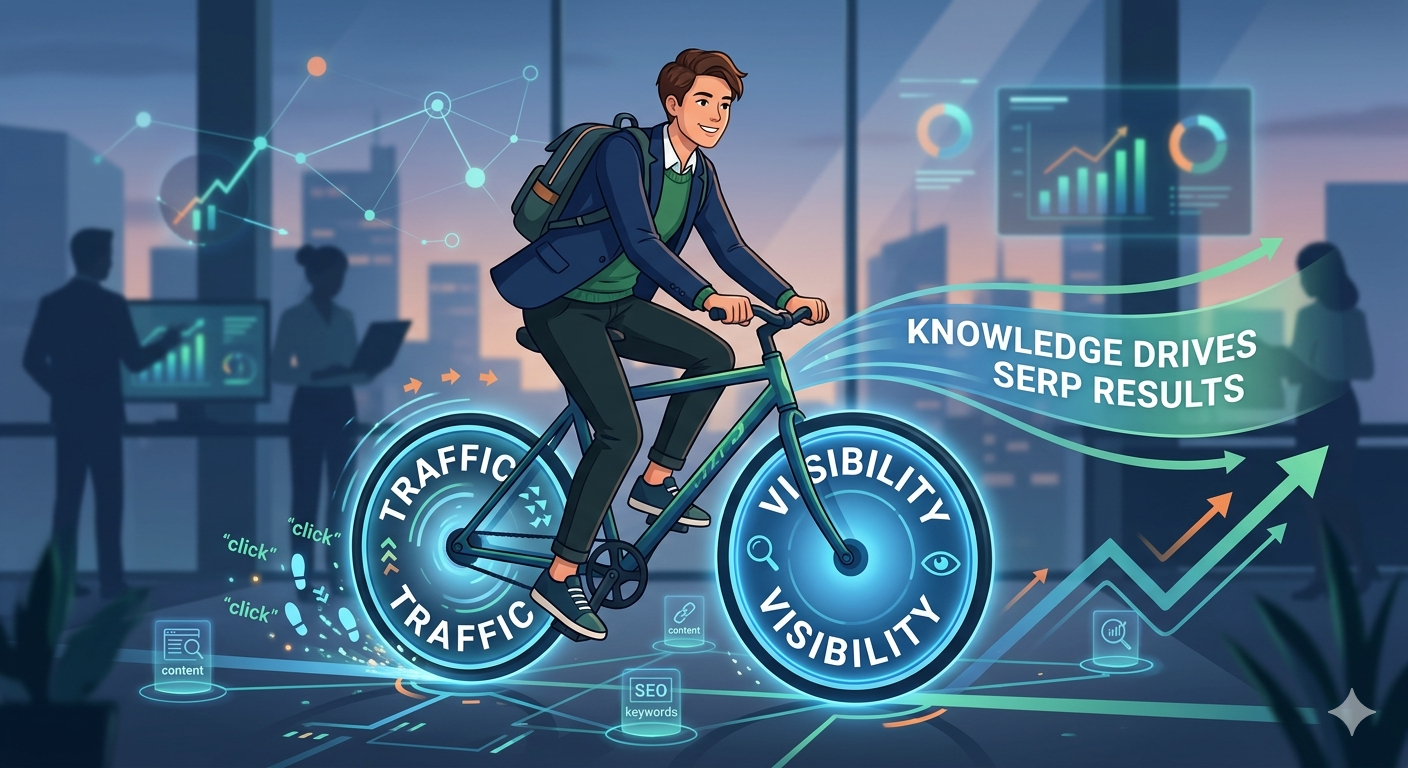
For decades, the "holy grail" of Search Engine Optimization (SEO) was measured by clicks, sessions, bounce rates, and click-through rate (CTR) to determine a site’s performance. Since the proliferation of artificial intelligence (AI), the online marketplace is quickly evolving from a "search engine" world to an "answer engine" world.
What Does Zero-Click Mean?
A zero-click search occurs when a user’s query is satisfied directly on the Search Engine Results Page (SERP). Whether through a Featured Snippet, a Knowledge Panel, or the rapidly expanding AI Overviews (formerly SGE), users are getting what they need without ever clicking through to a website. However, and this is really important, just because a user didn’t click through to your website, it doesn’t mean they didn’t see your site listed in the response. In fact, your content may have provided the answer they were seeking. So, to survive this new frontier, marketers must stop chasing the click and start rethinking "visibility".
Are You Ready for the "No-Click" Era?
These statistics are a sobering wake-up call for any digital marketing professional. According to a 2024 study by SparkToro and Datos, the "open web" is shrinking. Approximately 58.5% of searches now result in zero clicks. That means for every 1,000 searches, only 585 clicks actually reach the "open web." Nearly 300 clicks remain within Google-owned properties such as YouTube, Maps, and Google Shopping. As Rand Fishkin, CEO of SparkToro, famously noted in the study, "For marketers, this underscores the importance of zero-click content: getting value from searches that don’t result in a click."
How to Transition From SEO to AEO
So, if users aren't clicking on links in the SERPs, how does a brand stay relevant? The answer lies in Answer Engine Optimization (AEO) and Generative Engine Optimization (GEO).
1. Become the "Source of Truth."
In a zero-click world, being the source that an AI Overview cites is the new "Position One." Even if the user doesn't click, they see your brand name attached to the answer. To build brand recall and authority, use "Entity-first" content. Clearly define concepts, use structured data (Schema markup), and ensure your brand is associated with specific expert topics.
2. Optimize for "Position Zero."
Featured Snippets remain the prime real estate. So, your content must be structured for machine extraction. Use H2/H3 headers as questions and provide direct, 40-60-word answers immediately below them. Use bulleted lists and comparison tables, which are formats that make it easy for AI crawlers to scrape and display.
3. Sifting Through the Metrics.
If you measure success only by website traffic, your SEO reports will miss the most relevant data points. Succeeding in a zero-click world requires focusing on additional Key Performance Indicators (KPIs):
- SERP Impressions: How often does your brand appear in snippets or AI answers?
- Branded Search Volume: Is your zero-click visibility leading to searches for your company name directly?
- Share of Voice: What percentage of AI summaries cite your brand?
The Conversion Paradox
While total traffic may be declining, the quality of the remaining "click-through" traffic is often higher. A study cited by Bain & Company suggests that users who do click through after interacting with an AI summary or a deep snippet have higher intent. They aren't looking for a quick fact (which they already got); they are looking for a deep dive, a tool, or a purchase.
"The first conversion is no longer a form submission; it is familiarity," notes the team at Collaborative Haus. By the time a user finally clicks on your link, they have likely seen your brand cited three or four times in zero-click results.
From Traffic to Trust
Redefining SEO in a zero-click world is worrying less about traffic volume and more about citations in AI summaries. Your content must be citable, structured, and authoritative. You aren't just writing for humans; you are providing the "knowledge" that fuels the search engines that users trust. In the end, the brands that provide the best answers will be the ones that ultimately win over the customer.
Related Articles



+1 (800) 725-7950
+1 (305) 250-2502
Contact Us Any Time
One Charter Place
Coral Springs, FL 33065-4149 USA
Coral Springs, FL 33065-4149 USA
Got An Idea? Lets Make It
Happen Today
Just Wanna Chat ? Just let Us Know When