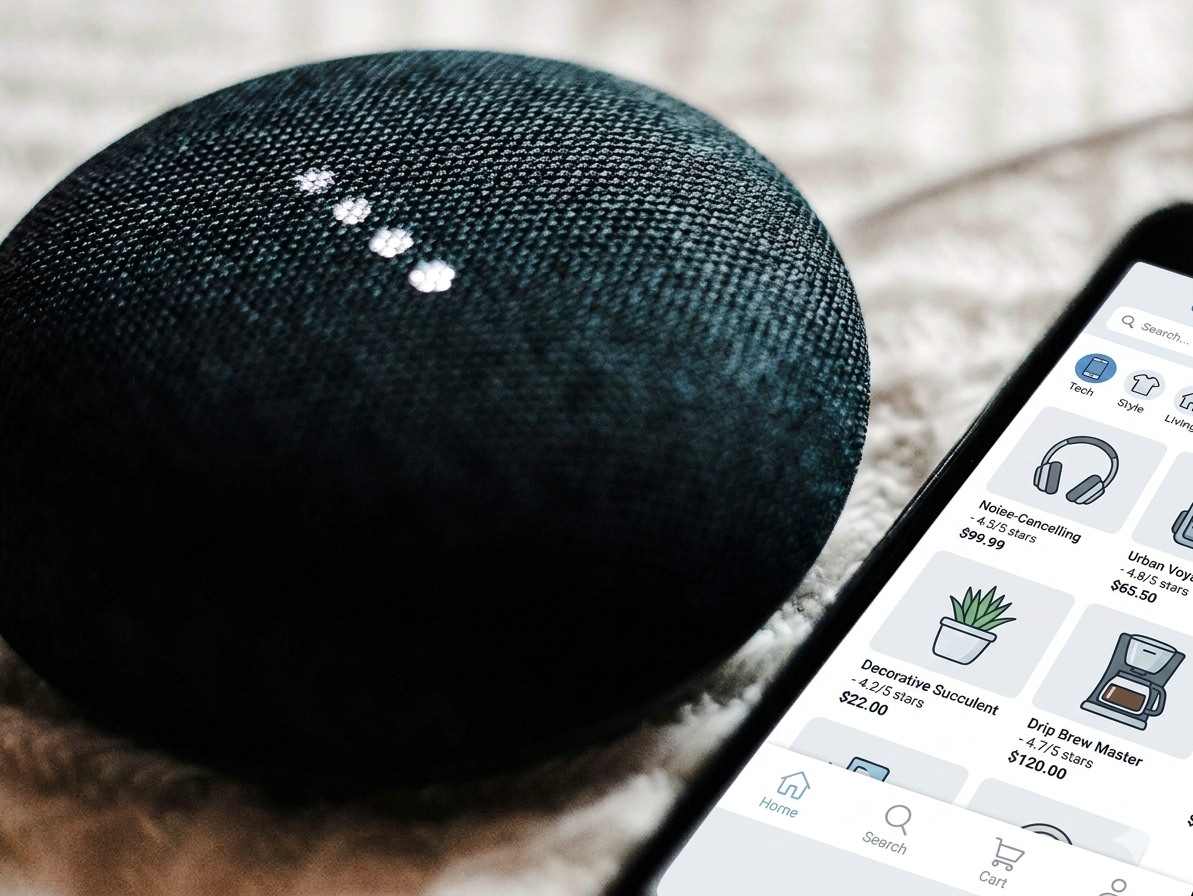
The technology revolution of our generation is no longer just happening in Silicon Valley labs or downtown San Francisco software suites—it has moved into the shopping cart. Much like the internet revolution of the late 90s redefined "going to the store," artificial intelligence is currently rewriting the rules of commerce.
As software developers incorporate AI into products at a record pace, retailers are incorporating AI-Mediated Commerce into their omnichannel marketing strategy. But what exactly is it, and why are retailers across the globe racing to adapt?
Understanding AI-Mediated Commerce
AI-mediated commerce, or agentic commerce, is a model in which artificial intelligence acts as a consumer’s virtual shopping agent. In this digital world, customers no longer spend hours scrolling through pages of search results. Instead, they delegate the task to an AI shopping assistant that “understands” their preferences and budget.
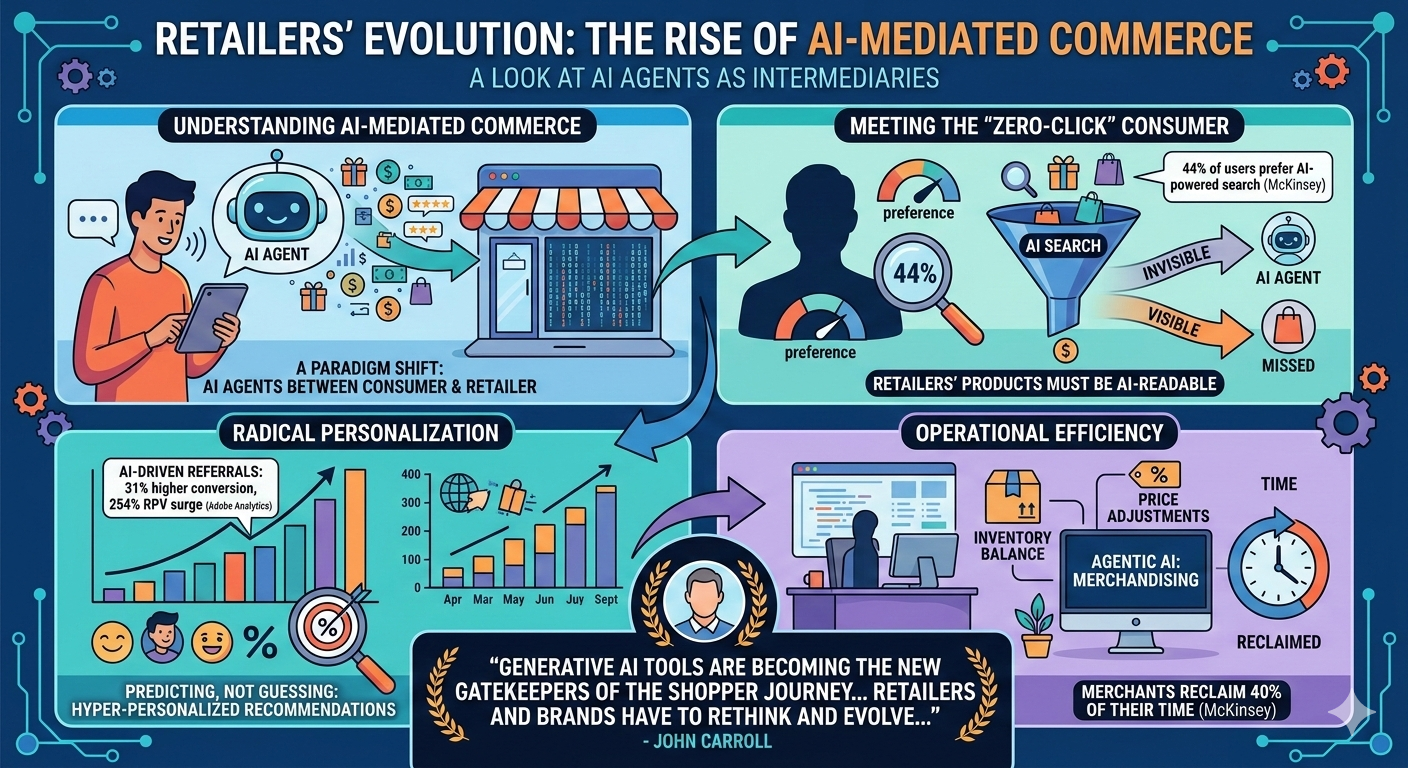
Whether it’s a chatbot that suggests the perfect gift or an autonomous agent that monitors price drops and completes a purchase on your behalf, the AI bot is the "new shopper." For retailers, this means their "customer" is increasingly a machine parsing data, rather than a human clicking on the “buy now” button.
Why Retailers Are Adapting
Why the sudden shift? It's really about survival and efficiency that are the primary drivers:
- Meeting the "Zero-Click" Consumer
Whether it's Amazon’s Alexa or Microsoft's Cortana, consumers are increasingly using Artificial Intelligence as their primary search tool. According to McKinsey & Company's research, 44% of users who have tried AI-powered search now prefer it over traditional search engines. Retailers are adapting because if their online products aren't "AI-ready", they are invisible to consumers.
- Hyper-Personalized Content
AI doesn’t just guess; it predicts. AI-driven referrals converted 31% more than traditional traffic sources during the 2025 holiday season, with revenue per visit (RPV) surging by 254%, according to Adobe Analytics. By analyzing these massive datasets, AI-mediated tools can offer "hyper-personalized" product or service recommendations that increase conversions.
- Operational Efficiency
Behind the scenes, retailers are using "Agentic AI" to handle the heavy lifting of merchandising. McKinsey reports that by offloading manual tasks like inventory balancing and price adjustments to artificial intelligence, merchants can reclaim up to 40% of their time to focus on strategy and brand growth.
The Transition
The transition from human-centric to machine-mediated commerce is a fundamental shift in business logic. As John Carroll, President of Connected Commerce at Acosta Group, explains:
"Generative AI tools are becoming the new gatekeepers of the shopper journey. Retailers and brands have to rethink and evolve how they show up in AI-powered environments... in a future where voice assistants and autonomous agents drive purchase decisions."
Leading the Way to AI Commerce
Several industry leaders are already setting the blueprint for this new era:
- Stripe: Recently launched an "Agentic Commerce Suite," allowing businesses to make their online stores "readable" and "transactable" for autonomous AI buyers.
- Walmart & Amazon: Both have introduced AI assistants (like "Rufus" and "Sparky") that go beyond simple search, helping customers plan entire projects—like "What do I need for a child's birthday party?” while adding all necessary items to the cart at once.
- Klarna: Their AI assistant now handles the work of 700 full-time agents, managing customer service, returns, and personalized shopping advice with higher accuracy and customer satisfaction.
The Storefront of the Future
The AI retail revolution is moving faster than the e-commerce boom of twenty-five years ago. Retailers are quickly adapting to AI-mediated commerce as an omnichannel marketing strategy because the storefront of the future will be a clean, structured dataset. As the digital economy evolves, the winners won't just be the ones with the best products, but the ones who make it easiest for the AI shopping assistant to find, recommend, and buy them on behalf of consumers.
Related Articles





+1 (800) 725-7950
+1 (305) 250-2502
Contact Us Any Time
One Charter Place
Coral Springs, FL 33065-4149 USA
Coral Springs, FL 33065-4149 USA

Got An Idea? Lets Make It
Happen Today
Just Wanna Chat ? Just let Us Know When